

Introduction
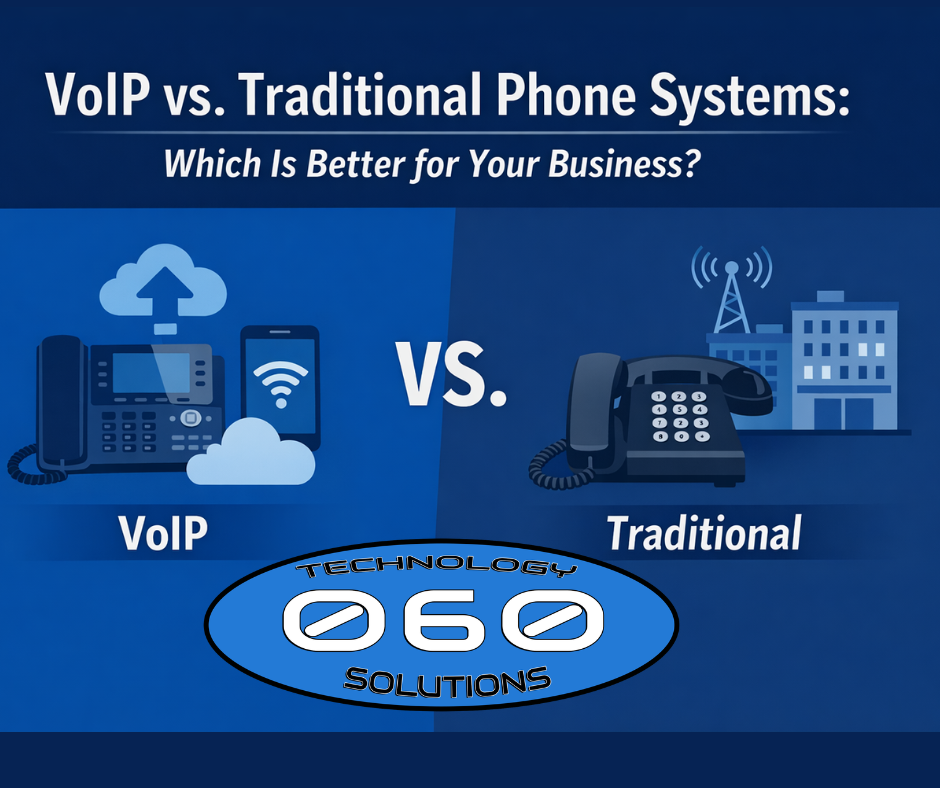
Choosing the right phone system is a critical business decision. However, many business owners still rely on traditional phone systems without realizing how much technology has changed. Today, VoIP (Voice over Internet Protocol) systems often provide more flexibility, lower costs, and better features. Therefore, understanding the difference between VoIP vs. traditional phone systems can help you make a smarter investment for your business.
In this guide, we’ll clearly compare both options—without technical jargon—so you can decide which communication system fits your business best.
If you want expert guidance, visit https://060tech.com/ or explore our VoIP Solutions through our Managed IT Services at https://060tech.com/managed-it-services/.
What Is a Traditional Phone System?
Traditional phone systems, often called landline or PBX systems, use physical copper lines connected through a local phone company. These systems have been around for decades and rely on dedicated hardware installed onsite.
Common characteristics of traditional systems include:
- Physical phone lines
- Onsite PBX equipment
- Limited flexibility
- Per‑line monthly charges
Although reliable, these systems are expensive to expand and difficult to manage remotely.
What Is VoIP?
VoIP (Voice over Internet Protocol) allows you to make and receive phone calls using your internet connection instead of physical phone lines. Because calls are transmitted digitally, VoIP systems support modern business needs more easily.
Common VoIP features include:
- Calls from desk phones, computers, or mobile apps
- Easy scalability
- Advanced call routing
- Built‑in voicemail to email
- Lower monthly costs
According to the FCC, VoIP technology has become the preferred communication solution for businesses due to its flexibility and cost efficiency.
🔗 FCC VoIP overview:
https://www.fcc.gov/voip
VoIP vs. Traditional Phone Systems: Key Comparisons
1️⃣ Cost
Traditional systems typically include:
- Expensive hardware
- Installation fees
- Per‑line charges
- Costly upgrades
VoIP systems, on the other hand:
- Use existing internet connections
- Require little onsite hardware
- Cost less per user
- Include features at no extra charge
✅ Winner: VoIP
2️⃣ Flexibility & Remote Work
Traditional phone systems are tied to a physical location. As a result, remote work support is limited.
VoIP allows employees to:
- Take calls from anywhere
- Use desk phones, laptops, or smartphones
- Maintain business continuity during outages
✅ Winner: VoIP
🔗 Microsoft guidance on remote communications:
https://learn.microsoft.com/microsoft-365/solutions/empower-people-to-work-remotely
3️⃣ Features & Productivity
Traditional systems often charge extra for:
- Call forwarding
- Voicemail features
- Conference calling
VoIP systems usually include:
- Auto attendants
- Call analytics
- Call recording
- Voicemail transcription
- CRM integrations
✅ Winner: VoIP
4️⃣ Scalability
Adding lines to a traditional system can require:
- New hardware
- Technician visits
- Long setup times
VoIP allows you to:
- Add or remove users instantly
- Scale as your business grows
- Pay only for what you need
✅ Winner: VoIP
5️⃣ Reliability & Security
Traditional systems can fail due to:
- Physical line damage
- Hardware failures
VoIP systems, when managed properly, offer:
- Redundant cloud servers
- Encrypted voice traffic
- Automatic failover
According to CISA, cloud‑based and managed services often improve resilience when properly secured.
🔗 CISA communication system security:
https://www.cisa.gov/topics/cybersecurity-best-practices
✅ Winner: VoIP (with proper IT management)
Is Traditional Phone Ever the Better Option?
For some businesses, traditional phone systems may still work if:
- Internet access is unreliable
- Only one phone line is needed
- No remote work is required
However, these cases are becoming rare. Therefore, most growing businesses benefit more from VoIP.
Why Businesses Choose VoIP with 060 Technology Solutions
060 Technology Solutions helps Kansas businesses transition to VoIP without disruption.
✅ VoIP setup and configuration
✅ Internet and network readiness assessment
✅ Ongoing monitoring and support
✅ Call quality optimization
✅ Local help desk support
Learn more here:
👉 https://060tech.com/
👉 https://060tech.com/managed-it-services/
Quick Self‑Check: Which Phone System Fits Your Business?
- You have remote or hybrid employees
- You want predictable monthly costs
- You need more than basic calling
- You expect business growth
- You want easy system management
If you answered “yes” to two or more, VoIP is likely the better choice.
Final Thoughts
While traditional phone systems still exist, VoIP has become the clear winner for most modern businesses. It offers better pricing, flexibility, scalability, and features—without the complexity.
If you’re ready to improve communication and reduce costs, VoIP may be the smartest upgrade your business can make this year.
Contact 060 Technology Solutions
📞 Local: 316.425.9060
📞 Toll‑Free: 1.888.424.5060
🌐 https://060tech.com/